Published
8 minute read
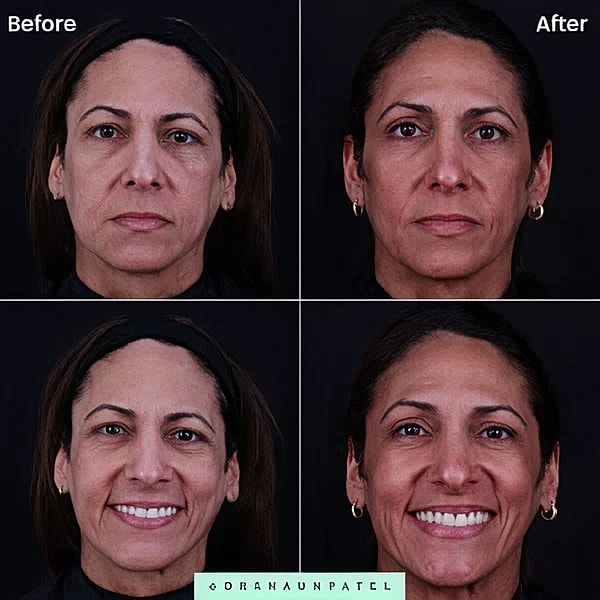
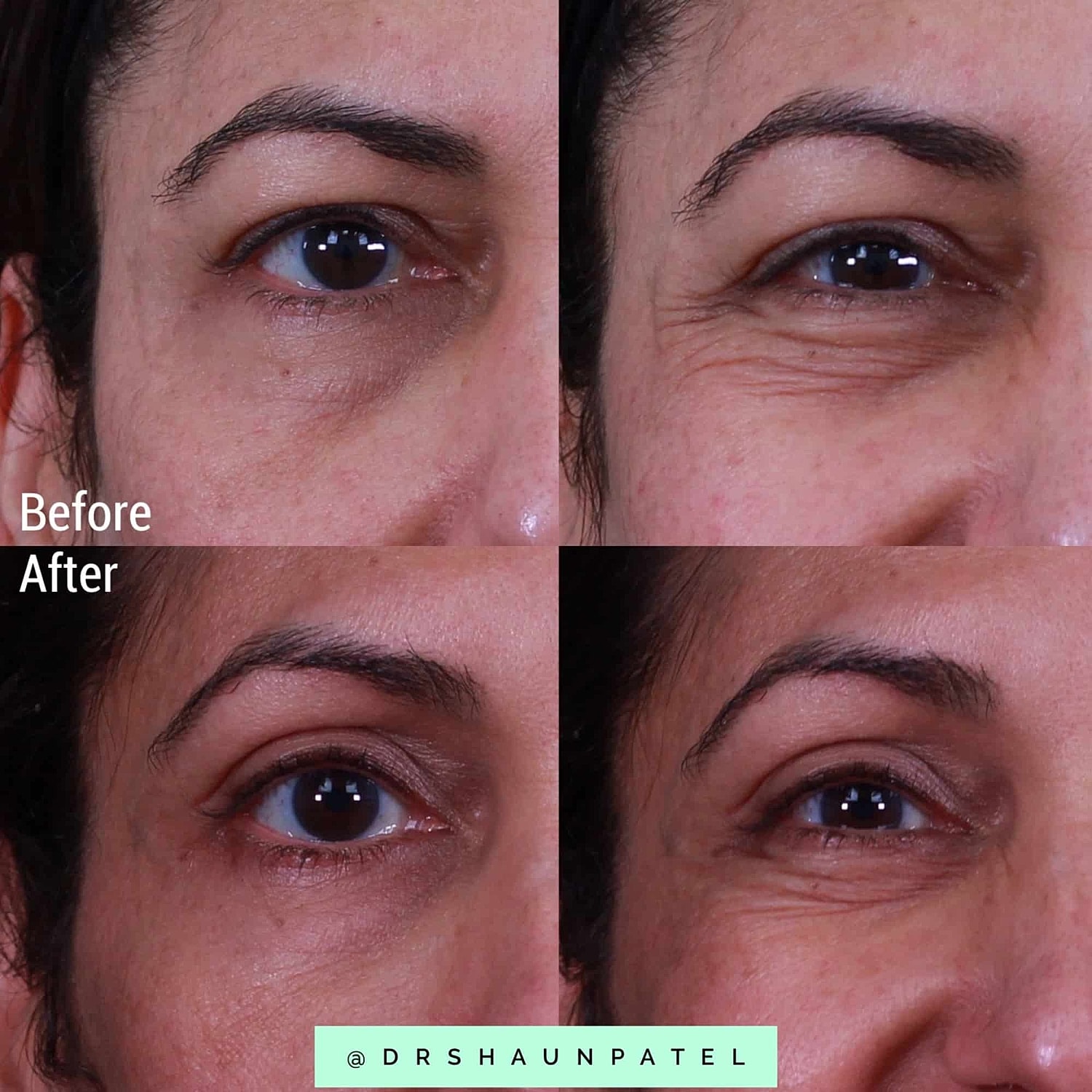
The phrase “eye lift” gets used too casually. Patients use it to describe droopy eyelids, heavy brows, under-eye hollows, loose skin, dark circles, crow’s feet, and tired-looking eyes. Those aren't all the same problem, and they shouldn't all get the same treatment.
This is where non-surgical eyelid rejuvenation gets interesting. A surgical blepharoplasty can be the right answer when there is significant excess skin, prominent fat pads, or eyelid heaviness affecting vision. Surgery physically removes or repositions tissue, which no eye drop, injectable, laser, or device can fully replicate.
But many patients who ask about an eye lift are not actually ready for eyelid surgery. Their concern may be early skin laxity, mild acquired ptosis, volume loss around the temples or lower lids, uneven skin texture, or muscle pull that makes the brow sit heavier than it should. In those cases, non-surgical eye lift treatments can be useful, provided the diagnosis is accurate.
Upneeq is a prescription eye drop used to temporarily improve low-lying upper eyelids in adults with acquired ptosis. It works by helping stimulate the eyelid muscle responsible for opening the eye, which can create a more alert, open appearance for several hours.
This is a good option when the eyelid itself sits lower because of mild muscle weakness. It is not a skin-tightening treatment, and it will not remove excess skin from the upper eyelids. It also will not correct lower eyelid bags or under-eye hollowing.
But for the right patient, Upneeq is refreshingly simple. One drop, temporary improvement, no procedure, no recovery time. Very rare in aesthetic medicine, where even the “easy” things usually arrive with a consent form and a small lecture about sunscreen.
Botox and Dysport can help create a subtle eyelid lift by relaxing the muscles that pull the brow downward. When those muscles soften, the brow may rest slightly higher, which can make the upper eyelids look more open.
This is often called a chemical brow lift, although I think that name makes it sound more dramatic than it is. In reality, it is a precise neuromodulator treatment that works best for mild upper eyelid heaviness, crow’s feet, forehead tension, or downward pull around the brow.
The success of this treatment depends on placement. Too much product in the wrong area can make the brow feel heavy. The right amount in the right muscles can make the eye area look more rested without making the forehead look frozen.

Botox is best when movement is part of the problem. It does not remove loose skin, and it should not be expected to replace surgical blepharoplasty when there is true excess skin.
Dermal fillers can be very helpful around the eyes, but this is one of the areas where restraint matters most. The under-eye region is delicate, thin, and not especially forgiving. It is not a place for casual filler enthusiasm.
Volume loss around the temples, cheeks, and lower eyelids can make the eyes look hollow or tired. The lower lid may look darker because of shadow, not pigment. The brow may look heavier because the surrounding support has changed. In those cases, carefully placed filler can restore volume and improve the transition between the lower eyelid and cheek.
We don't want to "fill the tear trough” automatically. That phrase has caused enough trouble. The real goal is to understand where the hollowing is coming from and whether filler will improve it or make puffiness worse.
Dermal fillers can be excellent for the right candidate. They can also be the wrong answer for someone with under-eye bags, fluid retention, or skin that is too thin to camouflage product well. Around the eyes, good judgment is the treatment.
PRP, or platelet-rich plasma, uses growth factors from a patient’s own blood to support skin repair and collagen production. It can be applied topically after treatments such as microneedling, depending on the concern and treatment plan.
Around the eyes, PRP is usually considered for skin quality. It may help patients with thin skin, early crepiness, dullness, or mild texture changes. It will not lift the eyelid in a structural way, but it can improve the appearance of delicate skin over time.
There are also growth factor-based treatments, like platelet-derived growth factor (PDGF), that may be used after microneedling or laser treatments to support recovery and skin rejuvenation. These are gradual treatments. The skin needs time to respond, build collagen, and improve its texture.
That is not a flaw. It is biology. Biology does not care about your event next Saturday.
Radiofrequency treatments, such as Thermage FLX, use controlled heat to stimulate collagen and improve mild skin laxity. When paired with microneedling, RF can be helpful for fine lines, crepey texture, and early looseness around the eye area.
This is not the treatment for someone with significant upper eyelid hooding or large lower eyelid bags. RF will not remove excess skin. It can, however, improve skin texture and firmness in patients with early changes who are not ready for surgery.
Results develop gradually because collagen remodeling takes time. Most patients see improvement over the following weeks and months, especially when treatment is part of a larger skin maintenance plan.
RF can be a useful middle ground for patients who want something stronger than skincare but are not prepared for invasive surgery or the recovery that comes with it.
Laser skin resurfacing can be useful when the main concern is skin quality rather than eyelid position. Fine lines, wrinkles, sun damage, rough texture, and crepiness around the eyes may improve when laser energy is used to stimulate collagen and renew the skin’s surface.
The eyelid area needs careful treatment because the skin is thin. That does not mean lasers should be avoided entirely. It means they should be used thoughtfully, with the right device, settings, and expectations.
Laser resurfacing may help the eye area look smoother and fresher, especially when the skin looks thin, etched, or damaged by sun exposure. It will not reposition fat pads or remove significant excess skin. Again, the laser is talented, but it is not secretly a plastic surgeon.
Non-surgical blepharoplasty treatments are best for mild to moderate concerns. They may be appropriate for patients with early sagging skin, mild droopy eyelids, volume loss, dark circles caused by hollowing, crow’s feet, or changes in skin texture.
They are also useful for patients who want improvement without surgical intervention or significant recovery time. Some treatments, such as Upneeq or Botox, can fit easily into a routine. Others, like RF or laser resurfacing, may involve a little downtime but can still be far less involved than surgery.
The important part is setting realistic expectations. Non-surgical techniques can improve the appearance of the eye area, but they can't remove excess skin, correct major under-eye bags, or improve vision obstruction caused by heavy lids.
There are times when I will tell a patient that surgery is the cleaner option.
If the upper eyelids have significant excess skin, if the lower eyelids have prominent fat pads, or if eyelid heaviness affects vision, surgical blepharoplasty may provide the most predictable result. A brow lift may also be considered when brow position is the bigger issue.
In many cases, the best long-term plan includes both approaches. Surgery can correct structure, while non-surgical treatments can maintain skin quality, soften wrinkles, restore volume, or support collagen production later.
“Eye lift” is a convenient phrase, but it's not a diagnosis. Low eyelids, heavy brows, hollow temples, dark circles, loose skin, wrinkles, and poor skin texture all require different thinking.
At Miami Skin + Vein, I evaluate the eye area in context with the full face. The upper eyelids, lower eyelids, brow, temples, cheeks, skin quality, and facial structure all influence the final plan.
Some patients may need one treatment. Others may benefit from a combination of Upneeq, Botox, dermal fillers, PRP, radiofrequency, or laser resurfacing.
My job isn't to make your eyes look “done,” but to make them look clearer, more rested, and more consistent with the person in front of me.
Schedule a consultation at Miami Skin + Vein to discuss non-surgical eye lift options and learn which approach makes sense for your anatomy, your goals, and your daily life.